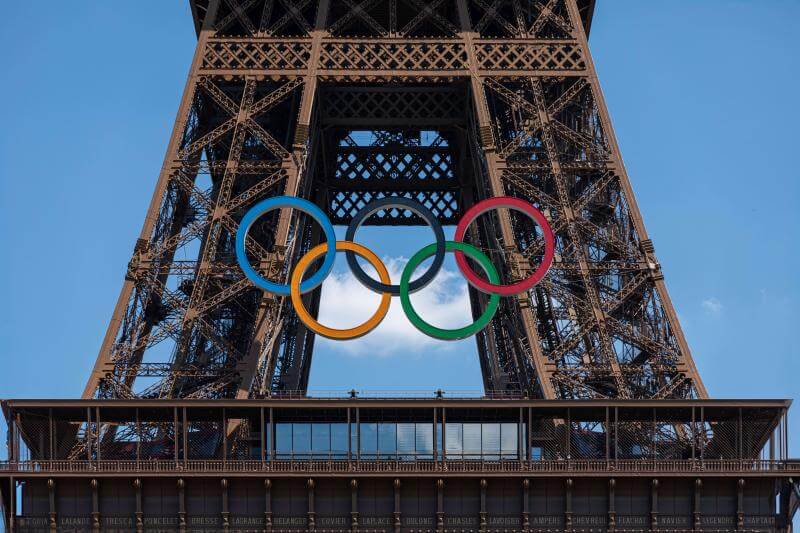
On July 26, the first events of the 2024 Olympic Games kicked off in the heart of Paris. This is an opportunity for Hôpital de La Tour to look back on the highlights of these Games and share the story of one of our sports medicine doctors who was on site at the Paris 2024 Olympics.
Paris 2024 Olympics
From July 26 to August 11, 2024, the city of Paris will host its third Summer Olympic Games. The 2024 Games will be the first in history to feature perfect gender parity among male and female athletes from around the world. In a few figures, they will bring together more than 10,500 athletes across 32 sports, including four new sports (breaking, climbing, skateboarding, and surfing). Among these athletes, some receive care at Hôpital de La Tour, thanks to its partnership with Team Genève, a support program for elite athletes in individual sports from the canton of Geneva. Team Genève comprises 47 members, 28 disciplines, and 25 athletes competing at the Paris 2024 Olympic Games.
Some key figures for the Swiss teams
It’s worth noting that during the selection period, 16 additional athletes joined the Swiss Olympic Team for Paris 2024, bringing the total number of affiliated athletes to over 132. Here’s a look at the medals won since the start of the Paris 2024 Olympic Games:
Gold medal
• Shooting - 50m rifle 3x20 - Chiara Leone
Silver medal
• Triathlon - Julie Derron
• Equestrian - Steve Guerdat
Bronze medals
• Shooting - 10m rifle - Audrey Gogniat
• Swimming - 200m backstroke - Roman Mityukov
• Rowing - 2 - Roman Röösli and Andrin Gulich
• Cycling - BMX racing - Zoé Claessens
Hôpital de La Tour and the Paris 2024 Olympic Games
Hôpital de La Tour is proud to be accredited as a Swiss Olympic Medical Center, a designation that attests to our multidisciplinary expertise and recognized experience in the sports medicine consultation and treatment of both elite athletes and recreational athletes. Our sports medicine care includes the diagnosis and management of injuries, musculoskeletal conditions, and illnesses that affect lifestyle and performance. But that’s not all! The professional teams at our Swiss Olympic Center of Excellence also provide support by answering questions regarding sports nutrition, sports psychology, and mental training.
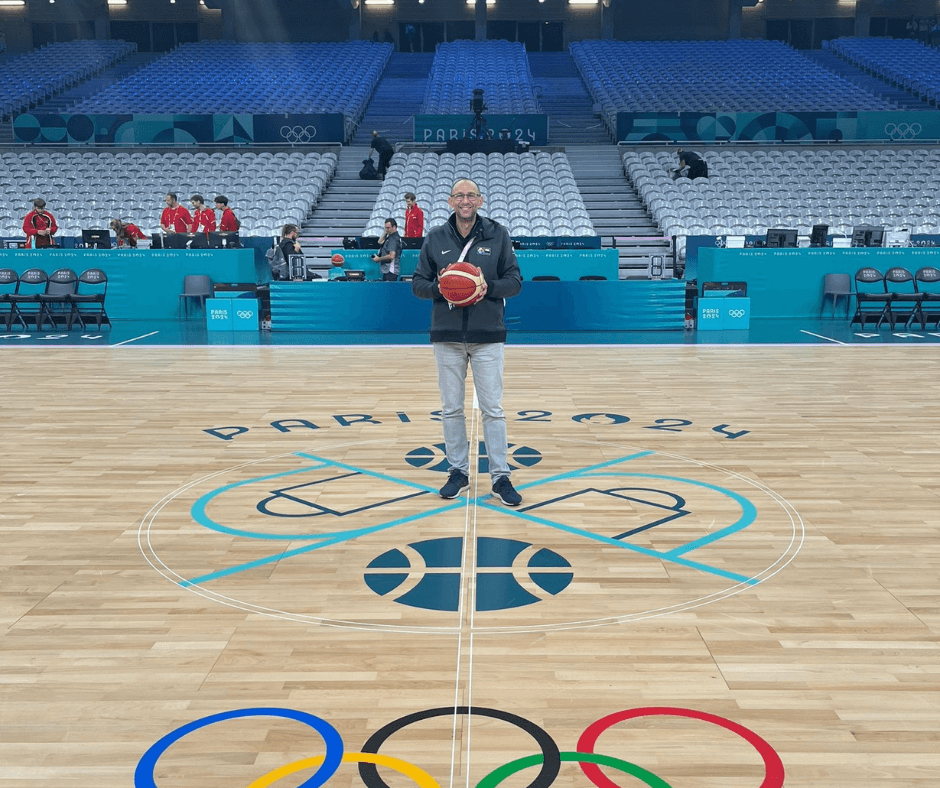
Souheil Sayegh, a sports medicine specialist at Hôpital de La Tour and appointed by FIBA (the International Basketball Federation) to serve at the 2024 Paris Olympics, shares his insights here:
How did your trip to the Olympics go?
S.S.: Great! We left from Lille, where the preliminary rounds of the basketball tournament were being held, and we’re now in Paris for the finals. Everything is going very smoothly, thanks to meticulous organization by the medical staff, who handle the medical infrastructure, transportation, hospitals, and scheduling appointments with various specialists… It’s a full-time job. I’m here to support the national medical teams, and I’ve been assigned by FIBA. As a doctor, I’m enjoying every day despite the intense pace.
What are the specific aspects of your assignment with FIBA during the Olympics?
S.S: I serve in a support and facilitation role with the other Olympic bodies. Each team has its own medical staff on site. We’re here to implement the processes and provide medical oversight.
What medical facilities and human resources (doctors, strength and conditioning coaches, etc.) have been put in place to optimize the athletes’ preparation and recovery during these Olympic Games?
S.S: The Olympic Village health center, housed in a polyclinic, was established through a cooperation agreement between Paris 2024 and the Assistance publique-Hôpitaux de Paris (AP-HP) . This facility provides the 10,500 athletes competing in the Olympic Games, as well as the 4,500 athletes competing in the Paralympic Games, with free access to consultations in sports medicine, cardiology, gynecology, and ophthalmology. When injuries become more serious, athletes are referred to the AP-HP. However, there are limitations, particularly on weekends, when care can become more complex—such as for an MRI. For example, last night we had to go out to get an ultrasound, and the staff in Paris organized everything. We make sure that everything runs smoothly according to the team doctor’s instructions.
How do basketball teams recover when they have back-to-back games?
S.S.: So far, each team has played a game every two days. During their rest time, the athletes can train, get massages, and, most importantly, rest. It all depends on the teams and the opponents they’ll face, but also on the game schedules. Sometimes they can do specific training sessions and adjust their meals based on game times, etc. They’re professional athletes—they know how to manage their workload with their coach and everyone else on the medical staff.
Do you have any anecdotes to share with us since you arrived?
S.S.: Just as the match between the Puerto Rico and South Sudan teams was about to begin, an unexpected incident occurred: the national anthem of Sudan was played instead of that of South Sudan. The mistake was quickly corrected, and the correct anthem was finally played, to the applause of the crowd.