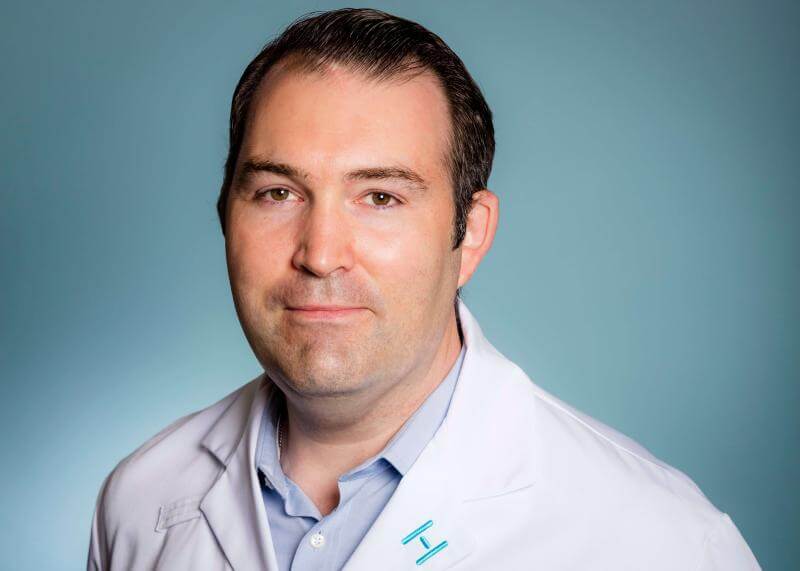
Dr. Myers, what exactly does this recognition entail?
The EACTS is the world’s largest association for cardiothoracic surgery, bringing together European surgeons. As chairman, I will be in charge of one of its four areas: adult cardiac surgery, which is my specialty.
It’s an organization I’ve been deeply involved with since my training. I served on the residents’ committee, then the congenital committee, and for over four years I’ve been a member of the European Board of Cardiothoracic Surgery, which I have the privilege of serving as secretary general.
So these previous experiences made you a fairly natural choice?
Probably. I’ve participated in major projects, particularly to standardize the exams at the end of cardiothoracic surgery training. These used to resemble an informal discussion among friends a bit too much, so we transitioned to a highly standardized format, with multiple-choice exams closely supervised by specialists in medical education, and we’re now launching a remote exam in light of the pandemic.
I’m also very active on social media, highlighting and discussing the latest scientific data. We’ve worked on several studies and challenged articles with questionable results on topics that have a major impact on the guidelines for our specialty. Thanks to this teamwork, the European Society of Cardiology (ESC), for example, will be reviewing the guidelines for myocardial revascularization in collaboration with our association. My work has been recognized and has indeed motivated my colleagues to give me more responsibilities.
So, verifying the accuracy and validity of research is also part of your responsibilities in this new position?
In a way, yes, but it’s primarily about helping and motivating others within task forces across several subspecialties. And cardiac surgery encompasses many of them: coronary surgery, valve surgery, catheter-based treatments, aortic surgery… My role will be more about overseeing and assisting, supporting the various fields as they make progress within the association.
The recognition you’re receiving is quite unusual for a doctor in private practice…
It’s true that associations of this type are often filled with academic physicians from university centers. I still have a foot in that door—as a privat-docent at the University of Geneva’s School of Medicine and as a consultant at the CHUV—but that’s only a small part of my work. My main focus is here, in the operating room at La Tour. It’s certainly positive that the EACTS is breaking with tradition and also represents practitioners and clinicians active on a day-to-day basis. Demonstrating that you don’t necessarily have to be at a university center to actively contribute to these associations is a good thing.
On that note, what do you think of the emphasis that La Tour Hospital places on training and research?
Our clinical practice is grounded in cutting-edge medicine and the use of the most recent data, so that we can continue to achieve the best possible outcomes. Staying informed about the latest studies—and participating in them whenever possible—is very important. This mindset is very much present at Hôpital de La Tour and among a large number of its physicians. Many of them consistently publish high-quality articles and are cited very regularly.
Here, we have a real opportunity to stay connected to research. The institution is committed to this, and we see that the physicians are interested and are initiating collaborations both locally and internationally.
The support that Hôpital de La Tour provides us in this area is excellent. And our quality-improvement initiatives also open up many opportunities. Being able to measure our work and analyze our practices allows us to improve our outcomes. This makes us more credible in the eyes of our patients and enables us to better inform them.
What lies ahead for you in your new role, and what is your mindset?
There will be a lot of work, particularly in analyzing the less invasive treatments proposed by our colleagues in cardiology, with whom we collaborate closely every day. We’ll have the opportunity to work together on the harmonious development of certain technologies and treatments that are currently gaining popularity, ensuring patient benefits and defining the exact framework for their application. Overall, I’m looking forward to interesting challenges and rewarding collaborations. I’m very proud to be recognized in this way by my peers, and I’m delighted to have this opportunity.
Interview by Yannick Richter, Communications Officer.