Hyperthermia involves heating the tissues in the tumor area to between 41 and 44°C. The technology acquired by Hôpital de La Tour uses 434 MHz microwaves for this purpose. Hyperthermia enhances the effects of radiation therapy; it is therefore primarily indicated for re-irradiation, particularly of recurrent breast tumors or tumors in the head and neck region.
This increase in temperature over a given period induces cellular damage and leads to the death (apoptosis) of tumor cells. Heat shock proteins emerge on the surface of tumor cells, allowing them to be recognized by the immune system, which then destroys them. By increasing the concentration of these proteins in the cell nucleus, hyperthermia prevents the self-repair of cancer cells’ DNA.
What are the benefits when combined with radiation therapy?
Hypoxic tumor areas are up to three times more resistant to ionizing radiation. Stimulating blood flow and oxygen supply therefore enhances the effectiveness of radiation therapy by increasing the number of free radicals that attack the DNA of tumor cells. Surrounding healthy tissues are “cooled” thanks to their normal, physiological blood flow.
In vivo studies have shown that hyperthermia can increase the effects of radiation therapy by up to five times. It is therefore one of the most effective enhancers of radiation therapy.
How does a hyperthermia session work?
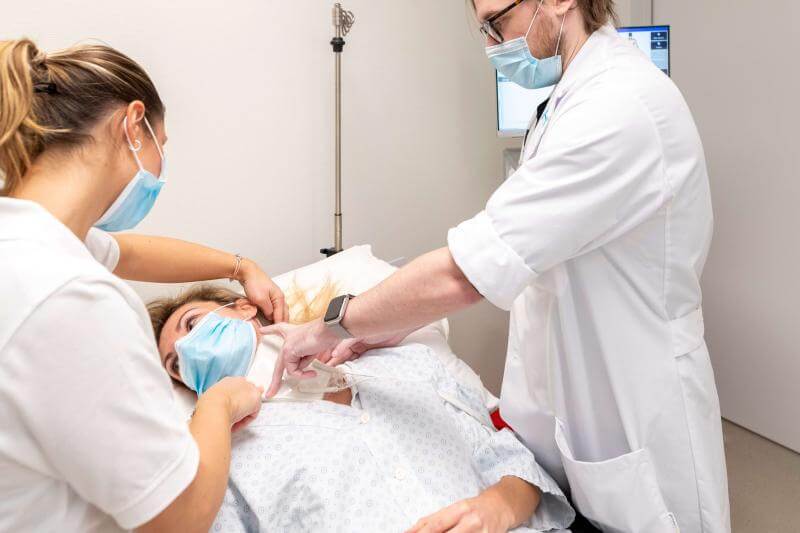
The radiation oncologist positions one or more probes on the body, over the area to be treated; these probes emit microwaves that heat the tissue until the therapeutic temperature is reached, which is then maintained for 30 to 60 minutes. The procedure is painless thanks to a neuromodulation system that eliminates the sensation of heat.
Potential side effects include skin reactions, drowsiness, and the urge to urinate.
Within 5 to 15 minutes following the hyperthermia phase, the patient receives their radiation therapy session.
Radiohyperthermia sessions generally take place every other day, with the total number of sessions varying from patient to patient.
Dr. Thomas Breuneval & Dr. Ambroise Champion
Specialists in radio-oncology and radiation therapy