During the first wave of COVID-19 in late 2020, the virus spread so rapidly that testing centers and laboratories were quickly overwhelmed, leading to significant wait times for PCR tests and test results. While most studies focused on intensive care admissions and identifying patients at highest risk of developing severe disease, very few examined predictors of a mild infection (whether severe or not). We therefore sought to identify the characteristics and symptoms reported by patients that could predict COVID-19 and ultimately create a score that could be used for the early triage of potentially infected patients.
This retrospective study is based on data from 9,081 patients who underwent PCR testing at Hôpital de La Tour between August 1 and November 30, 2020. Patient characteristics (age, sex, comorbidities, smoking status, etc.), their symptoms (headache, fever, cough, loss of smell or taste, etc.), and the results of their PCR tests performed at the same time were collected in a single database. A portion of this database was used to create and train an artificial intelligence model that calculates the association between each symptom or patient characteristic and COVID-19. This model was then refined using a validation dataset (20%) and subsequently a test dataset (20%) to assess its actual ability to predict infection in new data.
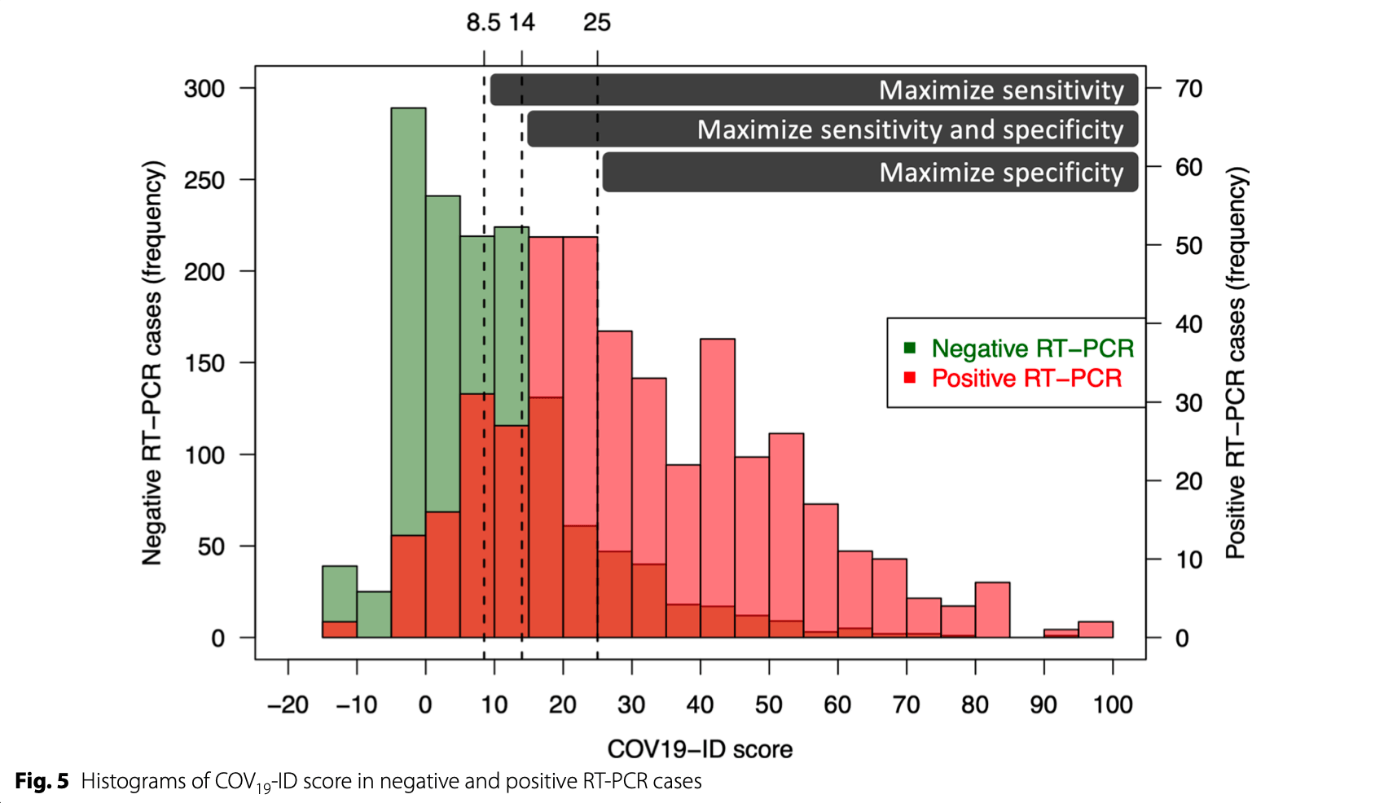
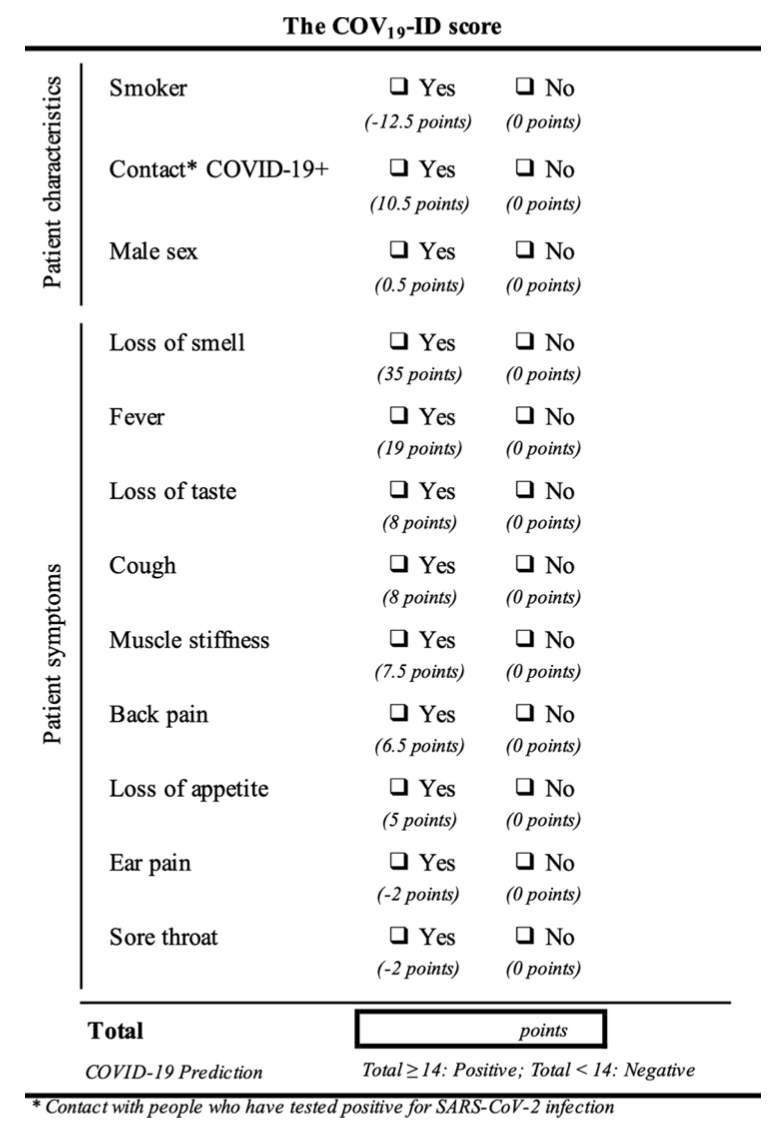
In total, 2,084 patients (22.9%) tested positive for COVID-19. The model demonstrated that COVID-19 was significantly associated with loss of smell, fever, a history of contact with an infected person, loss of taste, muscle stiffness, cough, back pain, loss of appetite, and male gender. However, COVID-19 was less strongly associated with smoking, sore throat, and ear pain. All of the aforementioned variables were included in the COV19-ID score, which demonstrated an accuracy of 74.2% across the test dataset, with good sensitivity (80.4%) and specificity (72.2%).
This study illustrates a prime example of how artificial intelligence can facilitate patient triage when laboratories and testing centers are overwhelmed. This score offers numerous advantages, as it can be calculated upon a patient’s admission (without imaging or laboratory tests), used to designate high- and low-risk zones for infection within testing centers, reduce wait times, prioritize PCR testing over antigen testing for patients at high risk of infection, and even help anticipate false negatives in PCR tests. However, the COV19-ID score must be adapted to new variants and validated in a vaccinated population before it can be used again today.
Find our other scientific publications on this page