In line with the recommendations of the “Smarter Medicine – Choosing Wisely Switzerland” movement, Hôpital de La Tour has examined the use of urinary catheters within the facility. The increasing frequency of this procedure in healthcare settings and the sometimes severe complications associated with it have led to its inclusion on the “Top 5” list of medical practices whose use should be moderated and reevaluated. Indeed, urinary catheter-associated infections are the most common hospital-acquired infections, with a major impact on morbidity, mortality, and healthcare costs. Nearly half of patients who are catheterized are so without a formal medical indication, and urinary catheters are left in place longer than necessary. However, the risk of developing an infection is closely linked to the duration of catheterization.
Inappropriate Urinary Catheters in 30% of Cases
We therefore conducted a study in the hospital wards at Hôpital de La Tour. After a 10-week observation period during the summer of 2017, we identified 146 urinary catheters inserted during the hospital stays of 1,119 patients, representing 13% of cases. The majority of these catheters were inserted in the operating room (99 out of 146). After reviewing the medical records, the indication for these urinary catheters was deemed inappropriate in 30% of cases.
A Multimodal Approach to Prevent Infection Risks
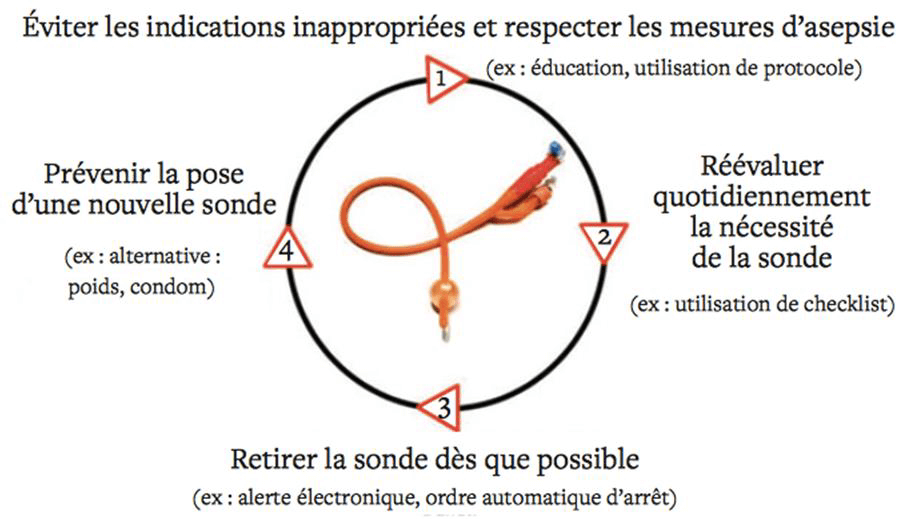
These findings were reported to the healthcare teams. The purpose of this feedback is to raise awareness among healthcare staff about the risks associated with urinary catheters, so that they can adapt and correct their practices. The ultimate goal of this initiative is, of course, to improve the quality of care. Consequently, a multimodal intervention designed to prevent urinary catheter-associated infections will be implemented in the institution’s inpatient units. These are simple measures that involve following guidelines, considering various alternatives, and reassessing the need for catheters on a daily basis (see figure). It has been proven that adhering to these guidelines reduces the number of catheter-associated urinary tract infections by more than 50%, with a positive impact on the quality of care and a reduction in costs. An assessment of the impact of these measures is scheduled two months after the implementation of the multimodal intervention.
Figure. Multimodal intervention to prevent catheter-associated infections
Prof. Dr. med. Omar Kherad, MPH, Chief of Internal Medicine, Quality Manager