What is an aortic dissection?
The aorta consists of three layers: the inner layer (the intima), the middle layer, and the outer layer. Blood pressure can cause a tear in the intima, allowing blood to flow into the other layers of the aortic wall. The tear can also extend upward toward the heart and reach the aortic valve, located between the aorta and the heart. An aortic dissection must be diagnosed and treated as quickly as possible.
What are the potential consequences?
The most critical situation occurs when the dissection is located in the ascending aorta, where the artery exits the heart. If not treated in time, it can progress and lead to serious and fatal consequences:
First and foremost, there is a risk of complete aortic rupture, which results in almost instantaneous death; the person loses approximately 5 liters of blood per minute.
If the dissection reaches the aortic valve—the valve located between the aorta and the heart—it can lead to heart failure.
As the condition progresses and affects the coronary arteries—the arteries that supply blood to the heart muscle and branch off from the aorta—the heart muscle no longer receives enough blood, resulting in a myocardial infarction.
Another possible consequence is cardiac tamponade. In this case, the dissection causes a contained rupture through which blood or fluid seeps into the pericardial cavity surrounding the heart. The heart is protected by a membrane, the pericardium, which allows it to move freely without adhering to the surrounding structures, such as the lungs or the chest wall. Since the pericardial cavity is not expandable, the fluid that accumulates there compresses the heart, which can lead to severe heart failure or even cardiac arrest.
What are the major challenges in managing this condition?
First, the diagnosis. Aortic dissection is a challenging condition, and very often, the initial diagnosis is incorrect. For example, it may be mistaken for a heart attack. It is important for healthcare providers to consider this condition when a patient presents with these symptoms.
Second, it is a condition that leaves little time to act, hence the importance of diagnosing it correctly and quickly.
When the patient arrived at the emergency room, what was he complaining of?
He was experiencing chest pain behind the sternum, which began after he went for a jog. To try to relieve the pain, he took painkillers and an anti-inflammatory medication that evening and overnight. Realizing that the pain wasn’t going away, he came to the emergency room on his own on Wednesday morning.
What can you tell us about him and his health?
He is a 37-year-old man who is athletic and enjoys running. He appears to lead a healthy lifestyle and has no known medical conditions.
How was he treated?
The emergency room physician, Dr. Majd Ramlawi, listened to his heart and heard a murmur. He realized that something serious was happening. So he immediately ordered a cardiac ultrasound and called on our colleagues in cardiology to perform it.
Doctors Stéphane Zaza and Axel Friedli immediately performed the ultrasound, which revealed clear findings: the aortic root—the part that emerges from the heart—was dilated to more than 6 cm;
the intimal flap—the site of the tear in the aorta’s inner wall—was visible; the aortic valve was leaking significantly; and there was fluid around the heart, in the pericardial cavity, which was beginning to compress it. The diagnosis of aortic dissection was made thanks to this examination and the expertise of our physicians.
During this initial evaluation, the patient experienced two episodes of fainting, which was concerning; it indicated that the heart was in distress and confirmed the urgency of the situation. His life was then in immediate danger.
What happened next?
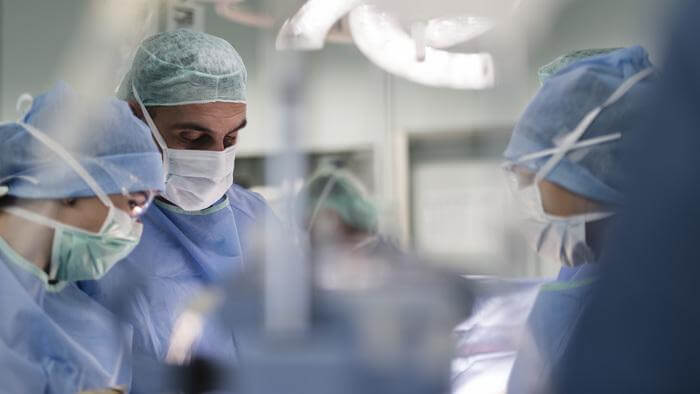
I was on call that day; my colleagues in the emergency department called me and quickly explained the case. Since the situation was particularly critical, we decided to proceed immediately to the operating room. Generally speaking, before treating an aortic dissection, we need to assess the condition of all the major arteries—from the aorta down to the inguinal folds—to determine the extent of the dissection and how to treat it. In this specific case, with the heart compressed and the patient having already experienced two episodes of fainting, he was not stable enough to undergo further imaging tests.
By the time I arrived on the scene, we had coordinated the procedure with everyone involved—emergency physicians, cardiologists, operating room staff, and anesthesiologists. I also contacted Dr. Aristotelis Panos and Dr. Jorge Sierra, both cardiac surgeons, so they could come and assist me. Dr. Michel Montessuit, who was already in the operating room for another procedure, indicated that he could also help if necessary. A procedure of this type is a team effort; we never operate alone.
Were you able to speak with the patient before the procedure?
Yes, I met him in the operating room. He was truly in critical condition; he was breaking out in a cold sweat and even vomited. I can say he was dying.
How did you proceed from there?
Dr. Emmanuel Schaub, the anesthesiologist, took charge and immediately brought to our attention that, given his condition, anesthesia could be fatal for our patient. Since he was suffering from a tamponade and the medications used for anesthesia can alter blood pressure, even a slight change in pressure could have led to cardiac arrest.
How did you address this problem?
We decided to set up extracorporeal circulation—a machine that temporarily takes over the functions of the heart and lungs—under local anesthesia by accessing the femoral vein and artery through the inguinal crease. The machine was there to take over in the event of cardiac arrest during anesthesia. It’s important to note that this procedure is normally performed under general anesthesia, but this was an absolute emergency, so we had no choice. This decision allowed us to put the patient under anesthesia, and we were able to access the heart immediately.
How did the procedure go?
It was a delicate operation. In this type of procedure, blood flow may be interrupted, and to preserve the organs, deep hypothermia must be induced. We cooled the patient. We began by relieving the pressure on the heart. Then we stopped the heart in order to replace the dissected segment of the aorta with a prosthesis. In addition, we had to replace the damaged aortic valve with a mechanical valve.
We therefore performed the Bentall procedure. This involves replacing the aortic valve and the aortic root with a prosthesis to which the coronary arteries are then reattached.
This is a routine procedure performed on a scheduled basis for people with heart valve disease. But under these circumstances, the procedure was very delicate. In cases of aortic dissection, the tissues are extremely brittle and fragile. Imagine placing stitches in a wet handkerchief that must also withstand blood pressure. We therefore had to finish by reinforcing the operated areas using various methods to prevent bleeding.
How is your patient doing today?
He was transferred to the intensive care unit and experienced no complications following the procedure. He was able to wake up from anesthesia three hours later and is now doing very well. He underwent a CT scan, which showed that all his other arteries are of normal size; there are no other aneurysms. The resected tissue was sent to the pathologist; we’re still awaiting the results. The patient will receive genetic counseling from specialists who will recommend various tests to determine if there’s a specific reason for what happened. Other family members will also need to be screened.
How will this affect his quality of life?
He’s young—37 years old—so he’ll be able to recover and enjoy a good quality of life. He’ll need to take anticoagulants because of the mechanical valve. Contact sports are therefore off-limits, and minor injuries such as razor cuts will bleed more. But aside from that, he’ll return to a normal life. For the next three months, he’ll need to be careful with his sternum; it had to be sawed open to access the heart and was repaired with thick sutures. However, it will take time for the sternum to heal completely. And the patient won’t be able to hold his daughter in his arms for 4 to 6 weeks, but of course, hugs are allowed!
What made this case exceptional?
What was exceptional was the absolute urgency caused by the tamponade. We wouldn’t have had time to transport our patient—even by helicopter—and he wouldn’t have survived.
What factors contributed to the favorable outcome of this life-threatening emergency?
Everything happened very quickly. Every member of the team responded appropriately in an emergency situation. Together, we were able to find solutions that ensured our patient’s survival. We also benefited from favorable working conditions: an emergency department, on-call cardiologists and surgeons, an on-call anesthesiologist, an operating room available for such emergencies, and an intensive care unit—all of which were essential. Teamwork and coordination were also key factors in the favorable outcome of this case.
It’s not every day that we treat someone under 40 who arrives in such a critical condition. This adds to the stress and pressure we feel. It wasn’t until after the procedure, while talking with him, that I learned he was the father of a daughter who had celebrated her first birthday just 10 days before the incident.
Comments by Dr. Patrick Myers, as recorded by Géraldine Monay, Communications Officer
Stay tuned to our social media channels for the story of this father, who was narrowly saved after suffering an aortic dissection, and the team that treated him.