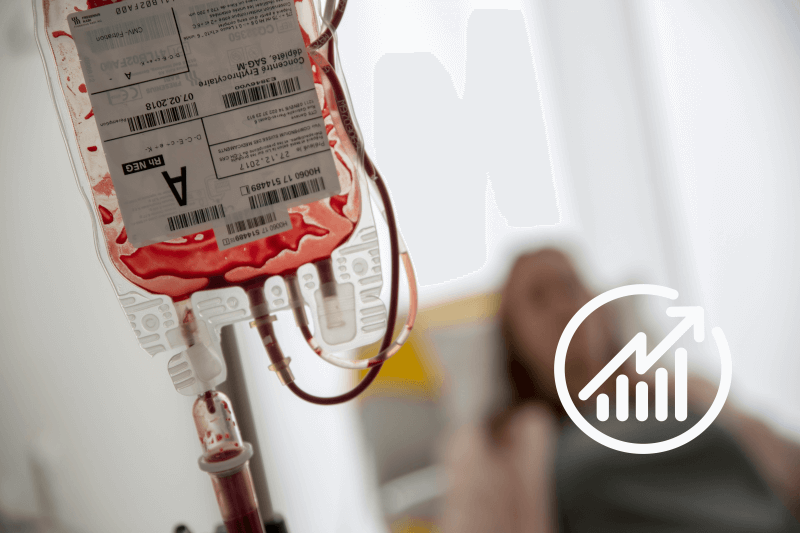
Indeed, blood is essential for the care of certain patients, yet Switzerland has 9.5 donors per 1,000 residents. Unfortunately, this number is insufficient to meet all needs, which can lead to periodic shortages.
Reducing Inappropriate Transfusions
For the past two years, the Quality Department has been leading a project aligned with the “Smarter Medicine – Choosing Wisely Switzerland” initiative, focusing on best practices in the use of blood transfusions. (Read the article on the Hôpital de La Tour project).
The project’s goal was to reduce the number of “inappropriate” blood transfusions—as defined by international guidelines—by communicating these guidelines to prescribers and providing them with individualized feedback so they could adjust their practices.
It appears that over the past two years at Hôpital de La Tour, there were 1,398 transfusions, of which 125 were potentially inappropriate—representing 8.9%. International guidelines recommend transfusion thresholds between 70 and 80 g/L, barring exceptions. Consequently, transfusions with a hemoglobin (Hb) level >90 g/L are considered potentially inappropriate. After review by a panel of clinicians, the indication for transfusion was ultimately deemed inappropriate in 54 cases (3.8%).
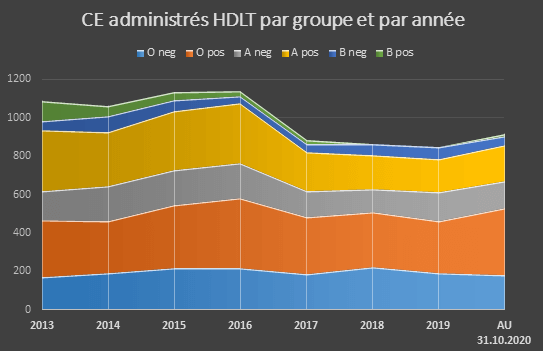
Since 2013, there has been a significant decline, reflecting international recommendations that tend to favor a restrictive transfusion policy in the majority of clinical situations.
Thus, the measures put in place help ensure the rational, economical, and ethical use of blood.
Prof. Dr. med. Omar Kherad, MPH, Chief of the Department of Internal Medicine, Quality Manager
Blood Drive at La Tour Hospital
The end of the year is often a time when there is a shortage of blood, and 2020 is no exception. To help boost donations, a blood drive organized with the CTS took place on Tuesday, December 15, at Hôpital de La Tour. This event generated a great deal of enthusiasm among our employees, who took turns throughout the day to donate blood.